People say, Write what you know.
People also say, Don't be so self-obsessed.
These might or might not be the same people, but it doesn't matter because the truth is, writers often get conflicting advice about how much of our own experiences to include in our writing (intentionally).
I added the "intentionally" because, to be honest, I don't think it is possible to write anything that does not stem from your own experience, conscious or subconscious, real or imaginary, in some way.
Before we dive in, I'd love to hear your thoughts. How much of yourself do you intentionally put into your work? You can simply reply to this email or add a comment under the post on the website.

Emotional truth
In general, the consensus among writers tends to be that, of course, you don't have to write only the literal things you know about, but in order for the story to be interesting or compelling, you do need to infuse your emotional truth in it.
What is emotional truth? It is the perceptual experience of something, the feeling at the core of what is going on with you.
We could say emotional truth is what is left of your experience when you take away all the factual data and external elements from it.
Meaning, if you live in Berlin, you don't have to only write stories set in Berlin. But wherever you do set your story, can you find something about it that you can relate to, emotionally?
If you studied art history, you don't only need to write about art historians. But if you write about someone else, what can you find about them that you can relate to on an emotional level?
And so on.
As so many things with the writing craft, this is something that writers already do intuitively. It's just something that is good to pay attention to when things feel off or foreign to us, or when we feel like we can't really connect to a story (anymore).
Somewhat unexpectedly, emotional truth is what makes a story universal.
It's that lovely paradox that the more personal and specific you get, the more universal the story will be.
So one aspect of the art of creative writing is the ability to capture and express your emotional truth through your characters and their stories. It's your ability to infuse your emotional truth into the story without overtaking it as your personal therapeutic outlet.
Using emotional truth
So how can we use emotional truth in our writing in a way that breathes life into the story and without writing solely about our own lives?
Honestly, there is no correct answer, and a huge part of this is developing our own sensibility and intuition. We know amazing art that is incredibly autobiographical - and we also know amazing art for which you would never guess who the author is because it bears no resemblance to their life.
But one thing I can say from my own experiences is that the project always turns out the best if I find a theme that has been particularly present in my life (and my mind) and explore it through characters.
I also love this advice from Chuck Palahniuk:
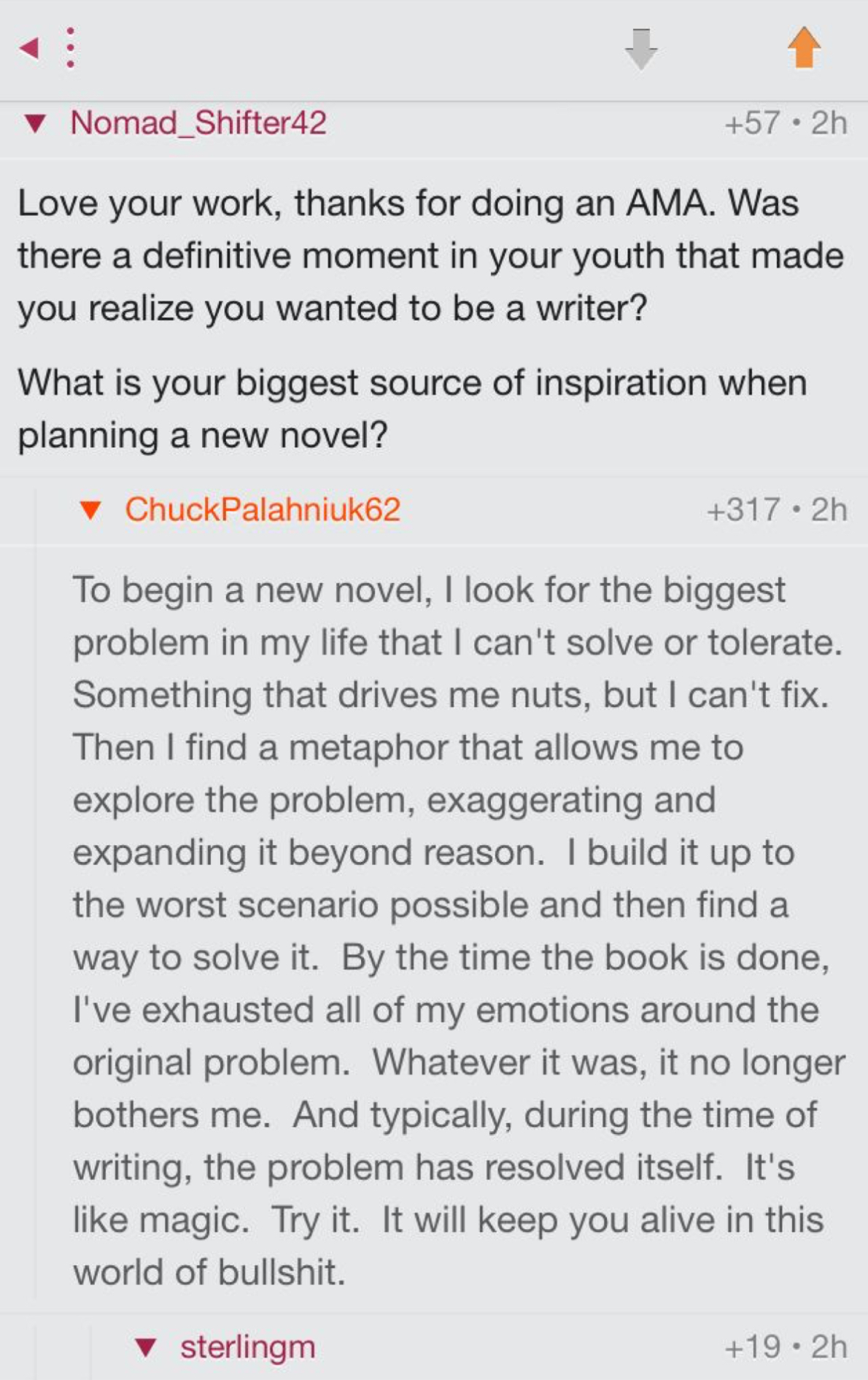
At the end of the day, I guess it's always up to each writer to find out what works best for them. Whatever you do, a part of you will always be in what you are writing.
What do you think? Have you found what kind of combination of craft & emotional truth works for you or are you still experimenting with it? Let me know - as mentioned, by commenting or replying to this email.
I wish you a wonderful week and I'll see you next time,
Katja
Thank you for being here.
If you're a writer who'd love some personalised support with your project, check out my 1:1 offerings.
If you want to dive into the craft of compelling plot twists, I invite you to check out the Plot Twist Magic workshop.
And if you'd like to join me in deep dives into various aspects of the writing craft, join me on YouTube.
See you next week!




Responses